Covenant Eyes · Lead product designer · 2019
Covenant Eyes Sign‑up
One product, one price, and a sign-up people could finish
Summary
Covenant Eyes is a subscription service that helps people quit porn through accountability: someone they trust receives reports of what they do online. Its sign-up converted about 15% of the people who started it. I redesigned it around a single product at a single price and a much shorter path, and conversion settled around 30%.
My role. Lead product designer, from research and analysis through concepts and implementation. I worked closely with Covenant Eyes’ VP of Sales and Marketing and with our UX research team.
- Timeline
- Design from May to August 2019, then design support through development
- Team
- Me, our UX research team, the VP of Sales and Marketing, and an in-house dev team of two to three engineers
- Users
- New customers, signing up themselves and often their family
- Client
- Covenant Eyes
- 15% → ~30% conversion, six months after launch
- 40%+ less time to sign up
- ~70% more confidence in signing up correctly
The problem
Thirty-plus touch points to buy one subscription
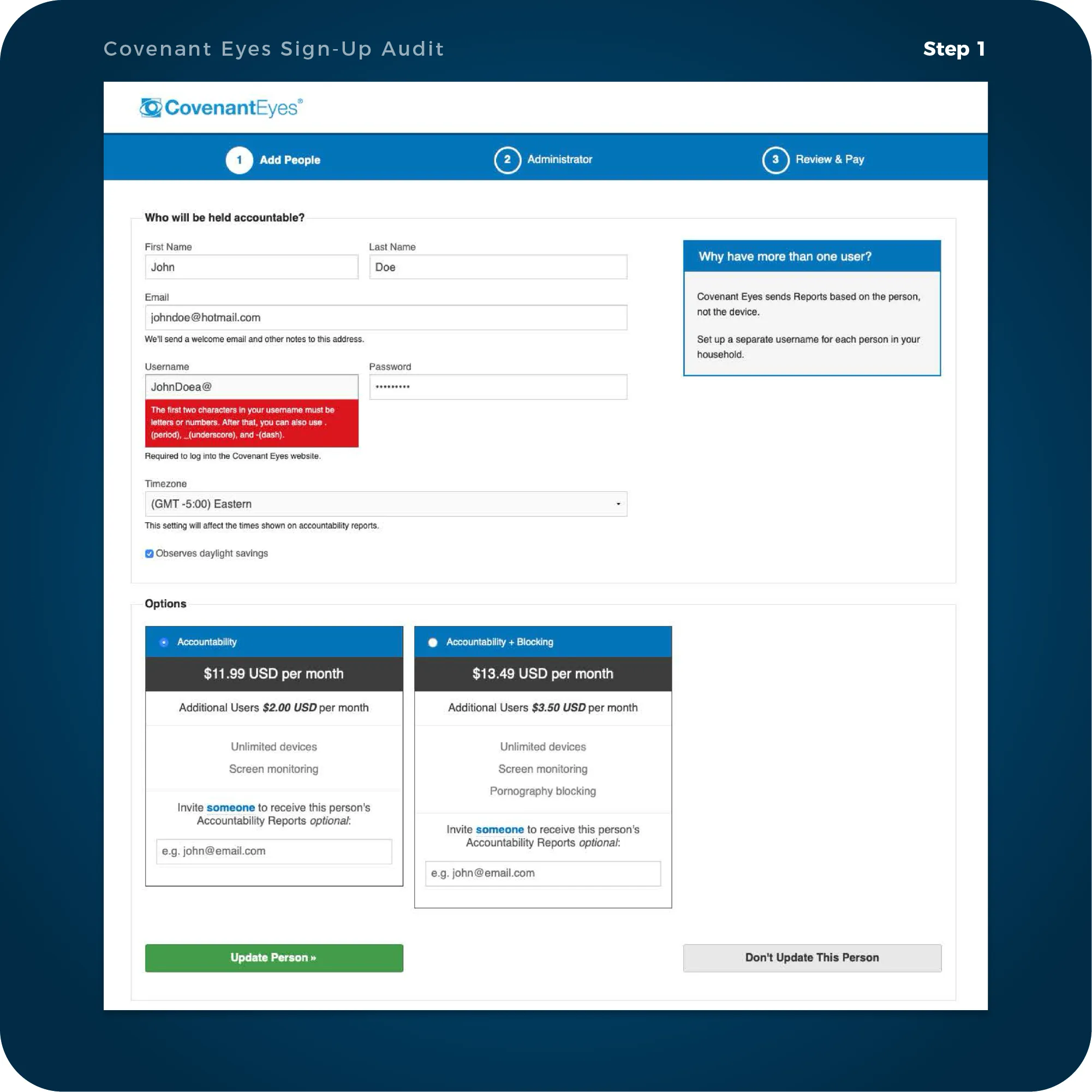
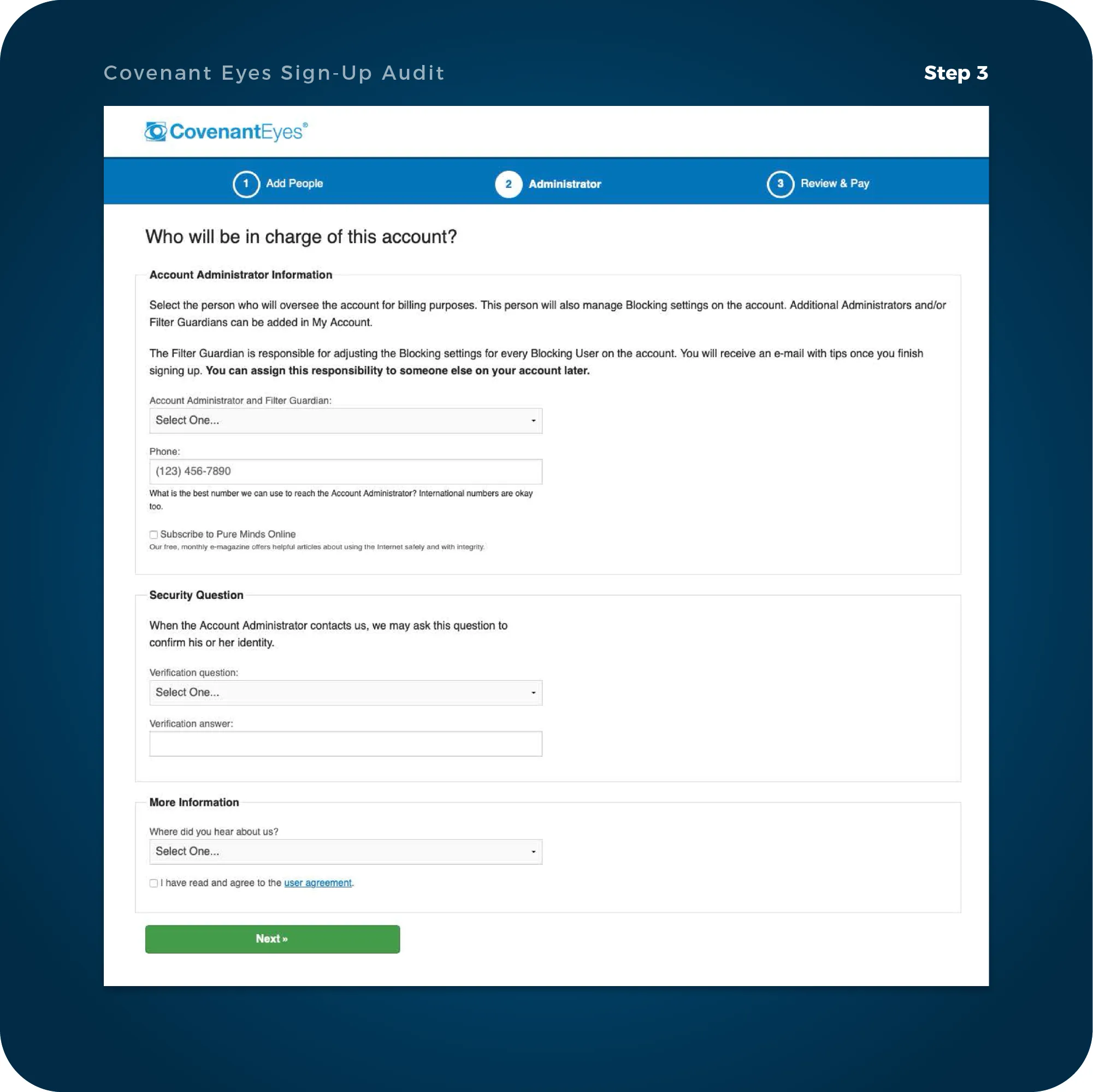
When I started, Covenant Eyes’ sign-up converted about 15% of the people who began it. The average path took more than 30 touch points: add every person who’d use the account, pick a plan for each, name an Account Administrator and a Filter Guardian, answer a security question, and only then pay. Surveys and observational research told us why people gave up partway.
- Too many steps.
- Sessions that timed out and lost people’s progress.
- Confusing terms on several steps.
- Dated forms, missing conveniences people expect.
- Overly strict password rules.
- Far more personal information than signing up needed.
The goal was to get conversion from 15% to 25% or higher.
Research
Sixty pain points, and the case for starting over
I ran a heuristic evaluation and usability audit of the existing flow and logged more than 60 pain points. With our UX research team, I watched potential customers try to sign up in three observational sessions, and I studied how other subscription services handle sign-up.
The audit mattered most for what it ruled out. With 60 problems on the table, patching a handful of them wasn’t a serious option, and the conversation moved from quick fixes to rethinking the flow from the ground up.
What we took from checkout research
Outside research, much of it from the Baymard Institute, pointed the same way: a checkout that’s too long or too complicated is one of the top reasons people abandon it. We worked from a few rules.
- Cut every field, word, and step that isn’t essential.
- Show errors inline, where they happen, with the reason.
- Make security visible, especially around payment.
- Write buttons in the customer’s voice: “Start my membership.”
- Thank people for the time they spent signing up.
Testing
Two small tests that made the case for a big one
Instead of shipping one big redesign and hoping, we split our biggest ideas into separate changes and tested each on its own, with everything else left as it was. That way we could see what each one did to conversion.
- Moving payment to the front of sign-up: 15% → about 17%.
- Replacing three plans with one product at one price: nearly 20%.
The second result, with the audit and the customer feedback behind it, was enough. Leadership approved the single product and price, and asked for a full redesign of sign-up built around it instead of another piecemeal change.
The design
One product, one price
We called the concept “One Product, One Price.” I explored five wireframe directions and tested them before settling on the final architecture: create an account, pay, then set the account up, with fewer required fields at every step.
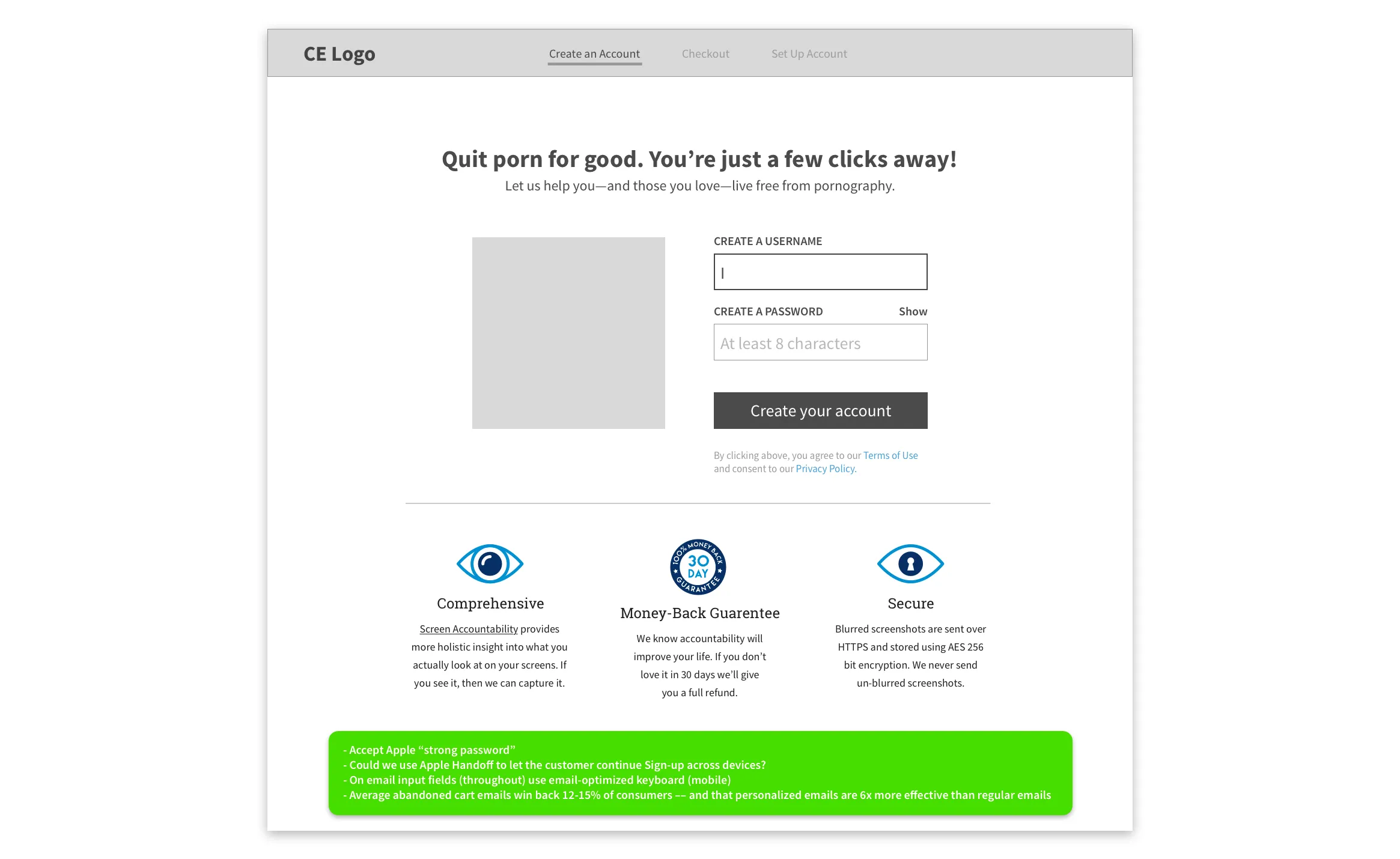
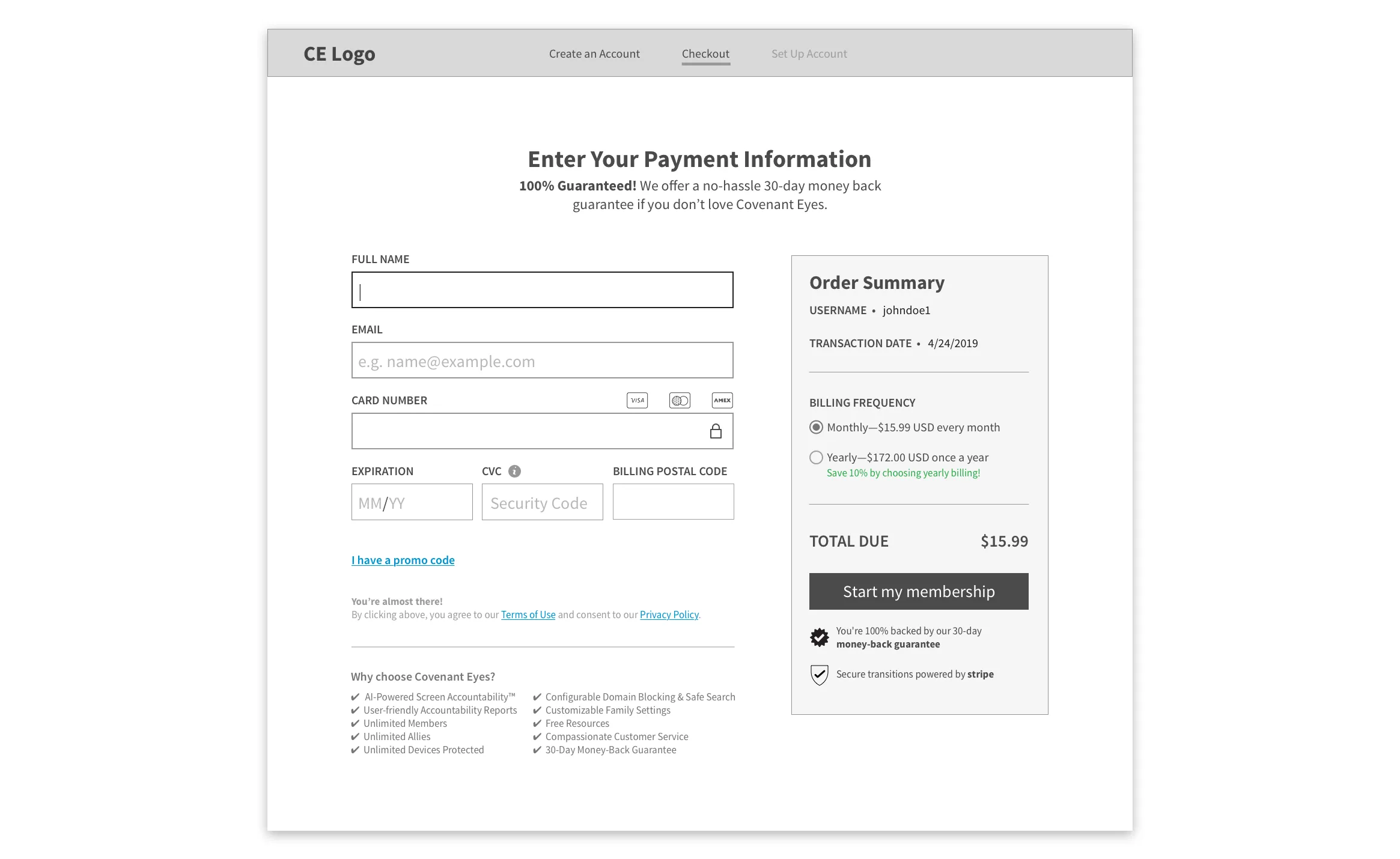
 Play video: Covenant Eyes sign-up: wireframe concepts
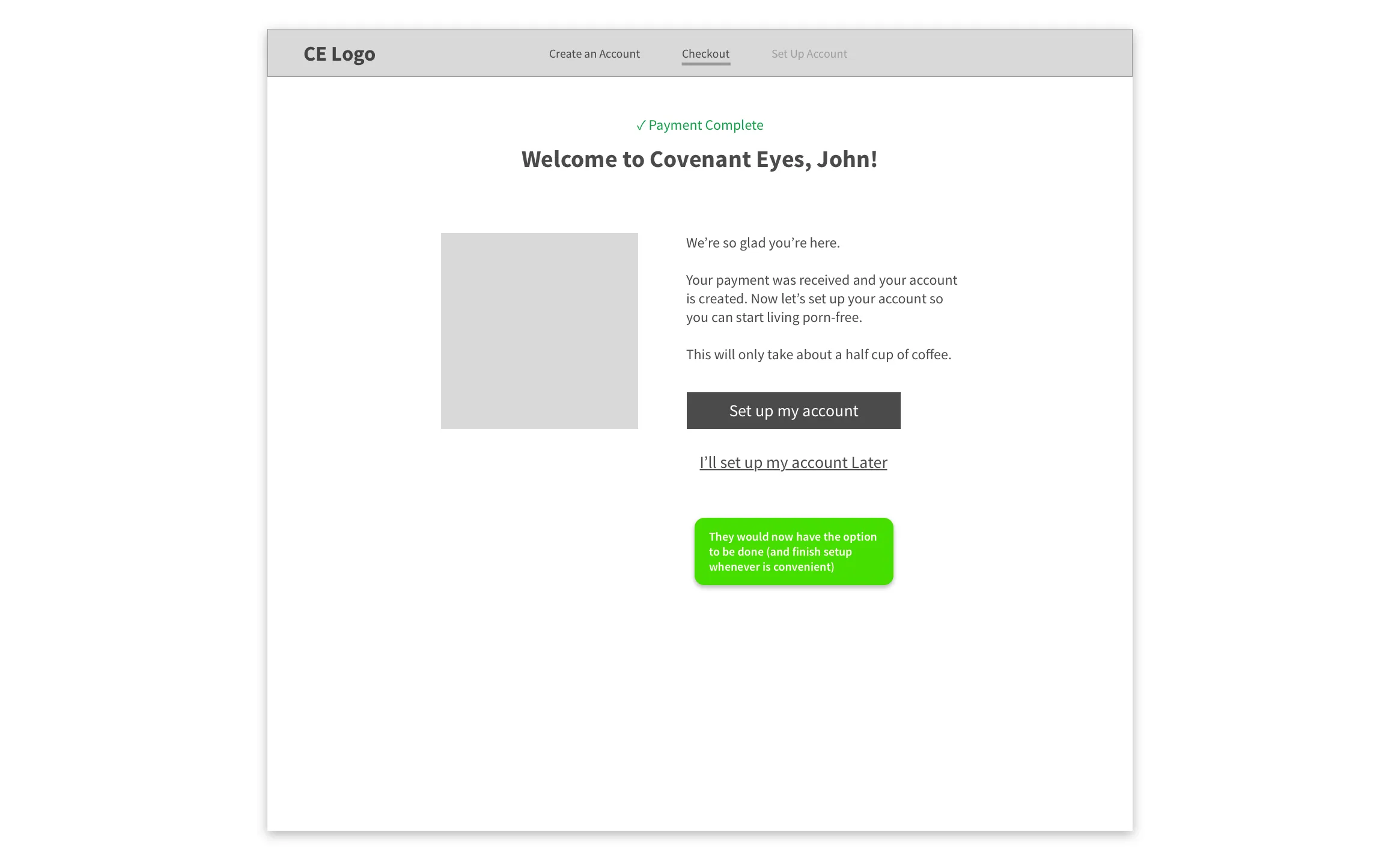
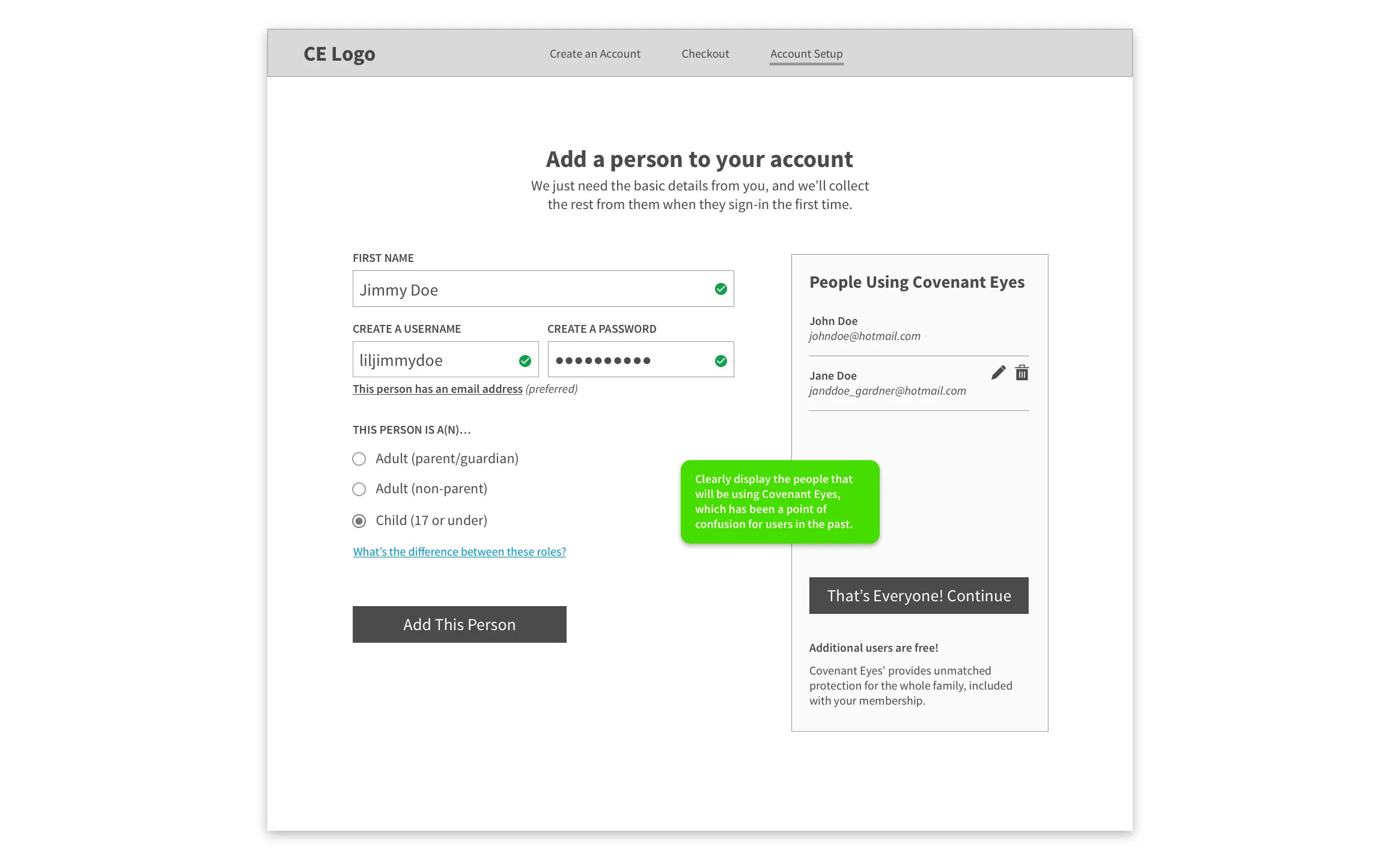
Setup came after payment, and people no longer had to finish it in one sitting. Once they’d paid, they could stop and finish whenever it suited them. Adding family members got its own clear step, because who an account actually covered had confused customers in the past.
Launch
What changed on the way to launch
Not every part of the wireframes made it intact, and the final screens show where the rest of the business pushed back.
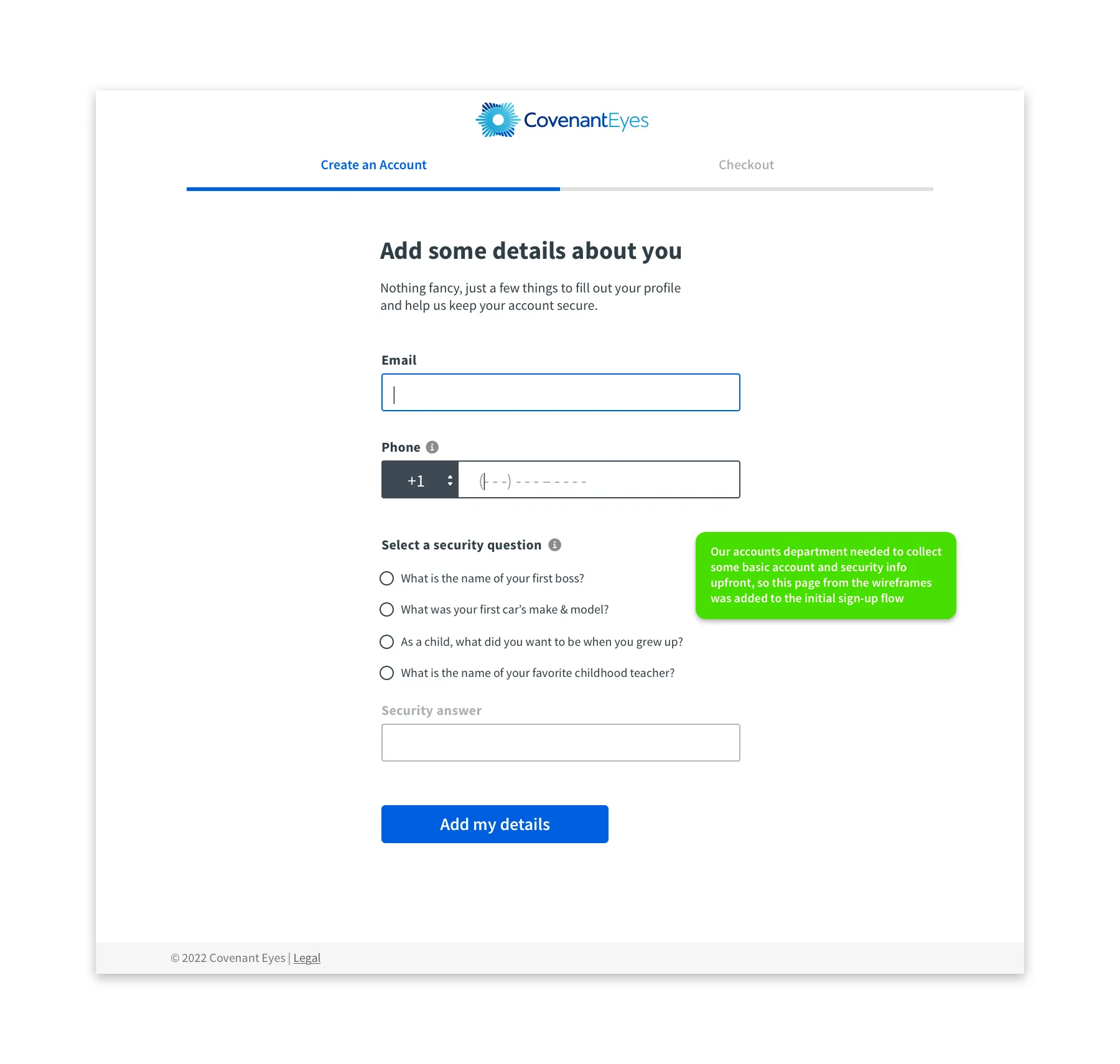
- Our accounts department needed basic account and security details up front, so the details page from the setup wireframes moved into the initial sign-up.
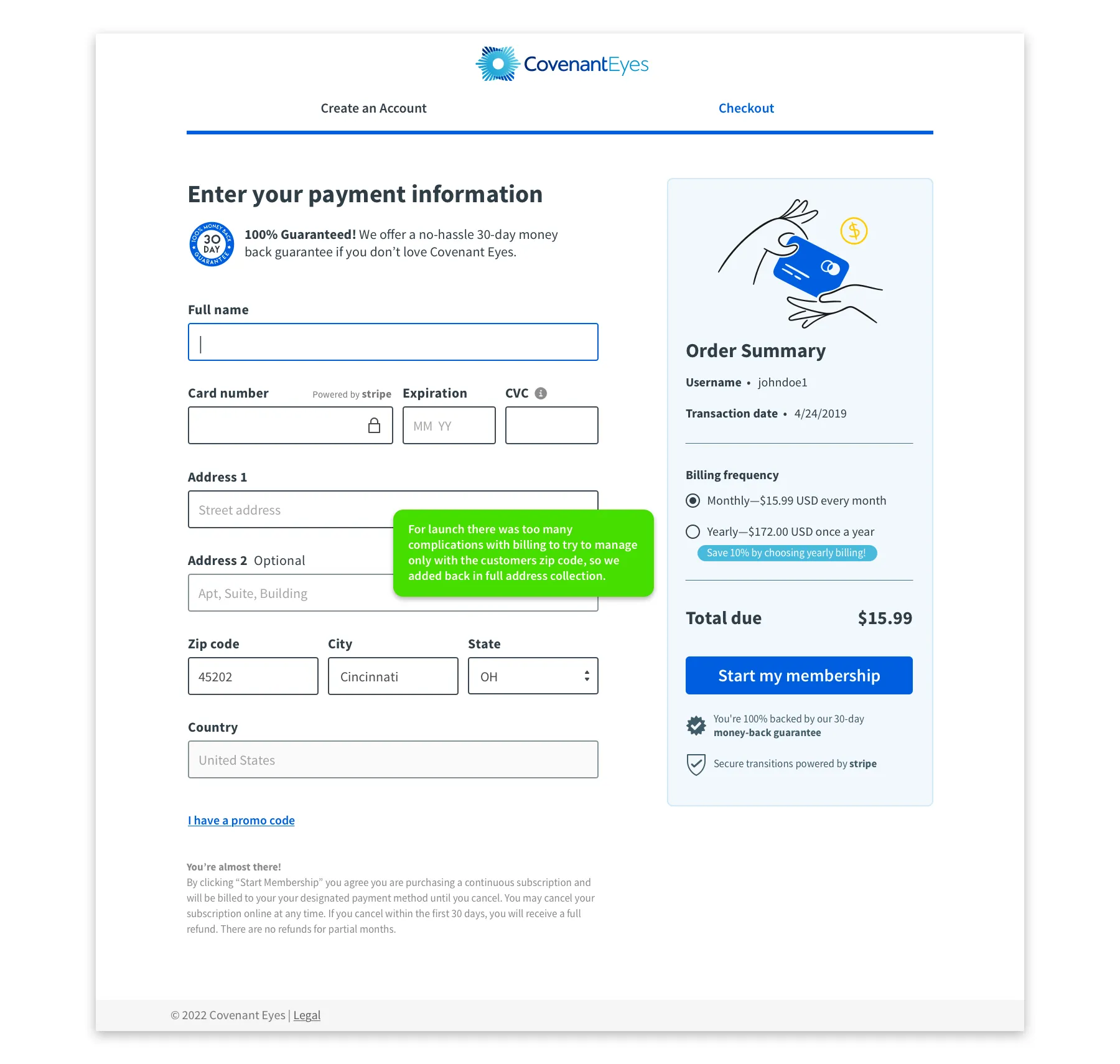
- Billing turned out to be too complicated to run on a ZIP code alone, so full address collection came back for launch.
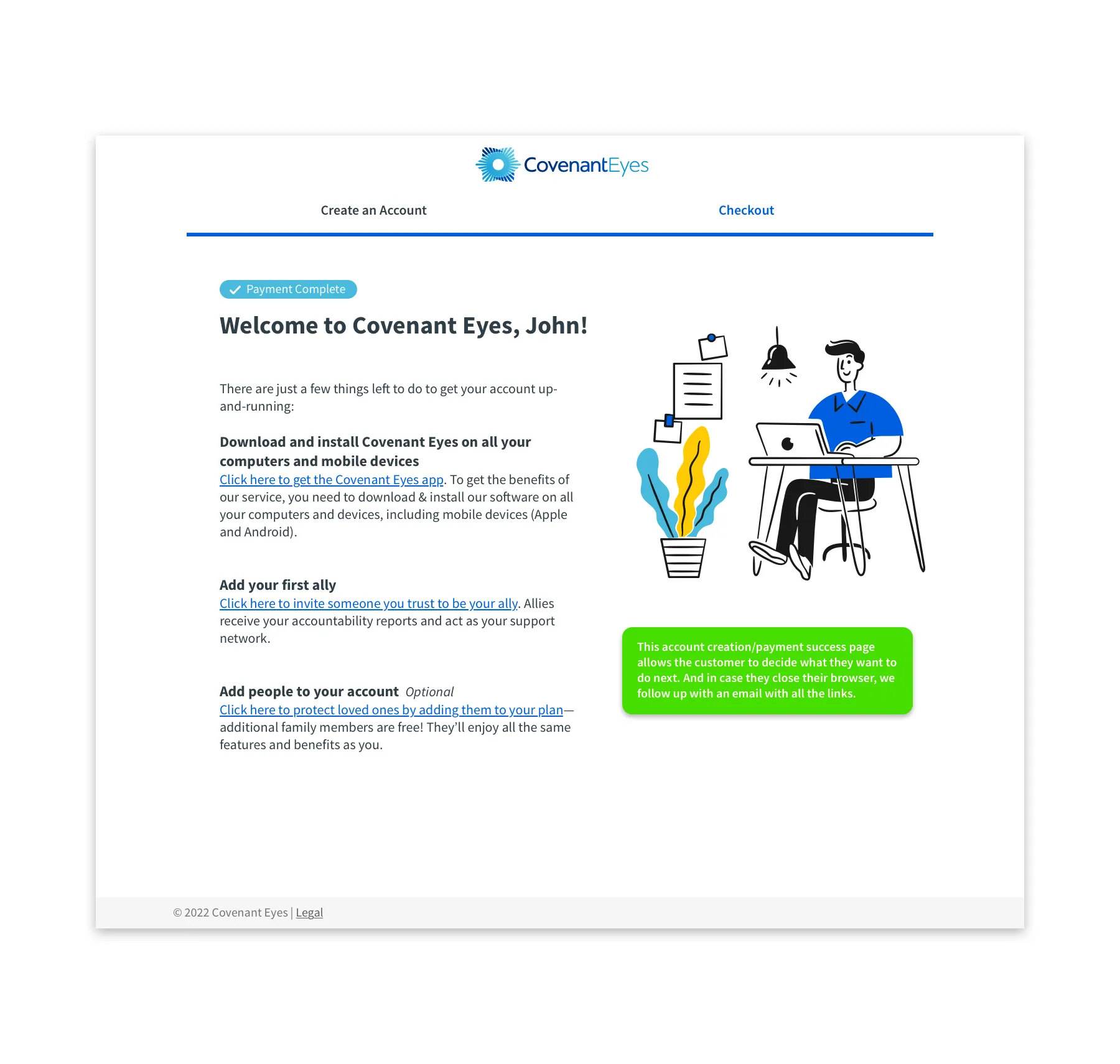
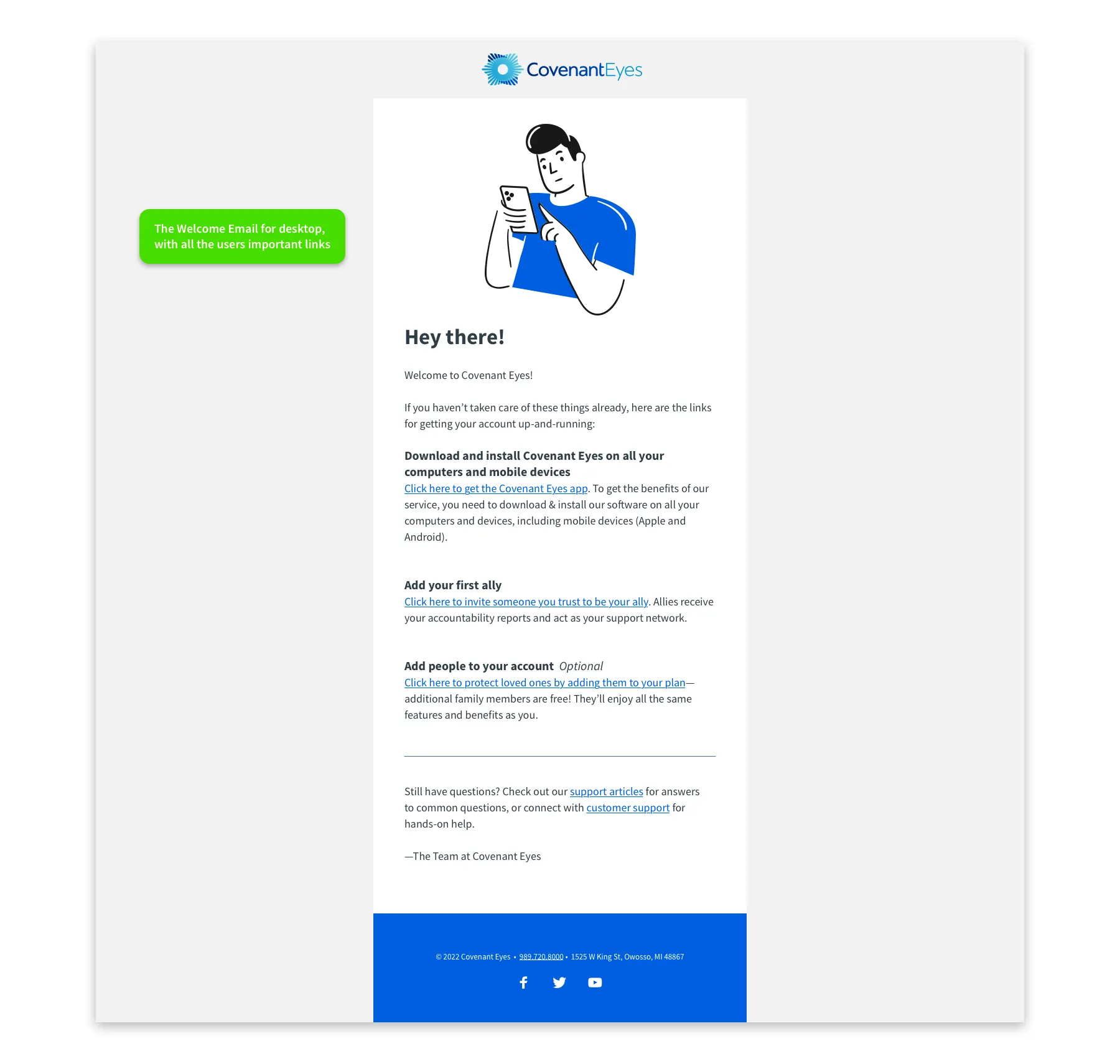
- The setup steps became a welcome page with a link for each task: install the apps, invite a first ally, add family members. People could close the browser at that point, so a welcome email followed with the same links.
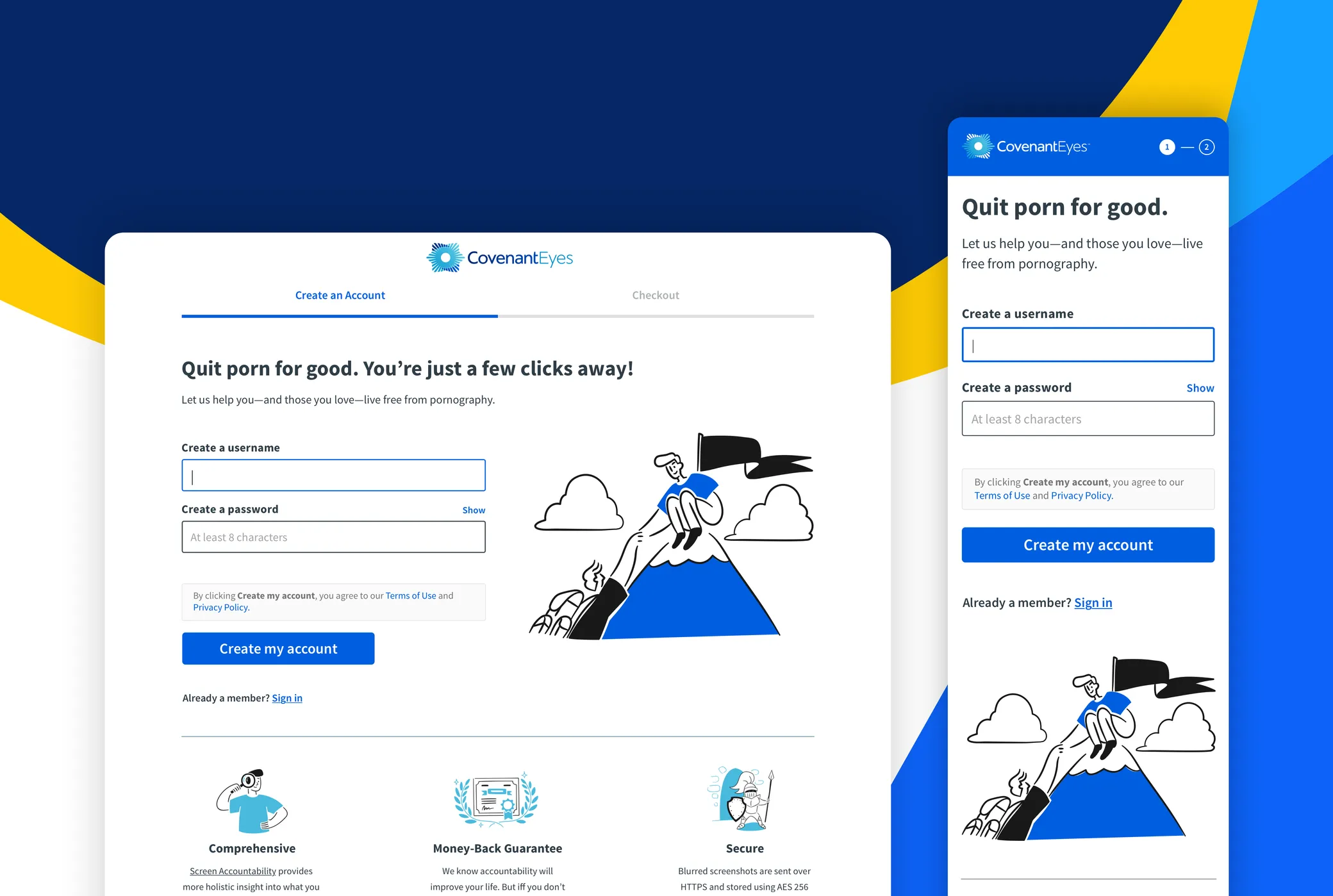
The final designs also debuted Covenant Eyes’ new illustration library.
Results
Double the conversion, in less time
- Conversion peaked near 40% after launch and settled around 30% six months later, up from 15% and past the 25% goal.
- Signing up takes 40% less time.
- Customers’ confidence that they’d completed sign-up correctly rose nearly 70%.